Key takeaway: Most sewer backups are caused by a blocked main line: tree roots, grease, wipes or a broken or sagging pipe. Stop using water, keep people away from the sewage, do not use chemical drain cleaner and call a plumber. Clean up with gloves, boots and disinfectant, and throw out soft items the sewage touched.
Common causes of a sewer backup
| Cause | How it happens | Typical sign |
|---|---|---|
| Tree roots | Roots grow into joints of older sewer pipe looking for water | Backups that return every few months |
| Grease | Cooking grease hardens inside the pipe | Kitchen sink is slow first |
| Wipes and paper towels | They do not break apart like toilet paper | Toilets back up first |
| Broken or sagging pipe | Soil movement or age creates a low spot or break | Repeated clogs at the same spot |
| Public sewer main blocked | A problem in the street line | Neighbors have backups too |
Is your sewer problem an emergency?
Sewage inside the house is never a wait-and-see problem. Use this chart to decide what to do.
- Call now
Sewage on the floor or in a tub
Stop all water use and call. Keep children and pets away. - Call now
Toilets and drains backing up together
The main line is blocked. Call before it overflows. - Same day
Gurgling drains and a sewer smell
A clog is building. Book a same-day visit. - Call the utility
Neighbors have backups too
The problem may be in the public sewer main. Call the sewer utility first.
Is it one drain or the main line?
If only one fixture is slow, it is a local clog. If flushing a toilet makes water rise in a tub or shower, or sewage comes up the lowest drain, the main line is blocked. If neighbors have the same problem, call the utility first.
First safe steps before help arrives
- Stop using all water in the house.
- Keep children and pets away from the area.
- Turn off electricity to the wet area only if you can do it from a dry spot.
- Do not pour chemical drain cleaner into the drains.
- Call a plumber: see sewer backup repair.
Sewage cleanup safety
- Wear rubber gloves, boots and eye protection; protect any cuts
- Remove standing water with a wet-vac or pump, then ventilate and dry the area
- Wash hard surfaces with soap and water, rinse, then disinfect (for example, 1/4 cup household bleach per gallon of water; never mix bleach with other cleaners)
- Throw out sewage-soaked carpet, padding, mattresses, upholstered furniture, stuffed toys, food and medicines
- Wash clothes used during cleanup separately in hot water
- For large areas, hire a water damage restoration company
How to prevent the next backup
- Never pour grease down the sink; let it cool and put it in the trash
- Flush only toilet paper
- Have the line camera-inspected if backups repeat
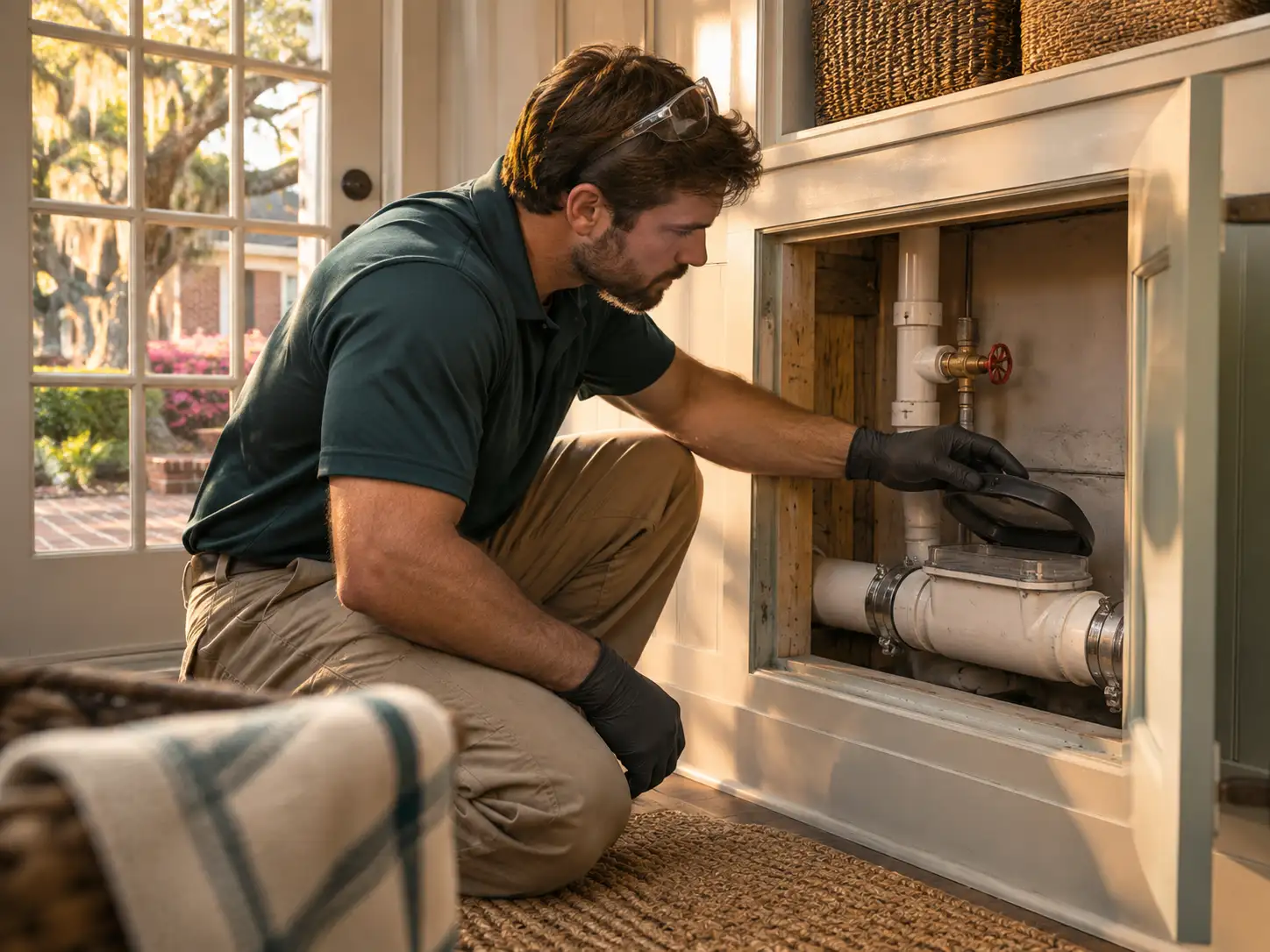
- Ask about a backwater valve if your lowest drains sit below the street sewer
- Check whether your homeowners policy has a sewer backup add-on
Cleaning up after a sewer backup
- Wear rubber boots, gloves and eye protection
- Keep children and pets out of the area until it is cleaned
- Throw away porous items soaked in sewage, such as carpet pads and cardboard
- Clean hard floors with soap and water, then a disinfectant
- Dry the area fully with fans and open windows to prevent mold
For a large backup, a water damage cleanup company can remove and disinfect the area. Ask your insurance company first whether sewer backup is covered under your policy; it is often a separate endorsement.
You or the utility?
If the backup is only in your home, the blockage is usually in your sewer line, and a plumber clears it. If neighbors have backups at the same time, the public sewer main may be blocked, and the utility should be called first. See who fixes a water or sewer line leak.
Who is responsible?
The line from your house to the public main is usually yours; the main in the street is the utility’s. Details for Augusta and Columbia County: who fixes water and sewer line leaks.
Sources: Massachusetts Department of Environmental Protection, Flooding and Sewage Back-ups: Home Care Guide (protective gear, items to discard, 1/4 cup bleach per gallon).