Key takeaway: To stop an overflowing toilet, lift the tank lid and push the flapper down, then close the supply valve behind the toilet. Use a flange plunger to clear the clog; never pour chemicals in. If water rises in a tub or shower when you flush, the main sewer line is blocked.
Stop the water in 10 seconds
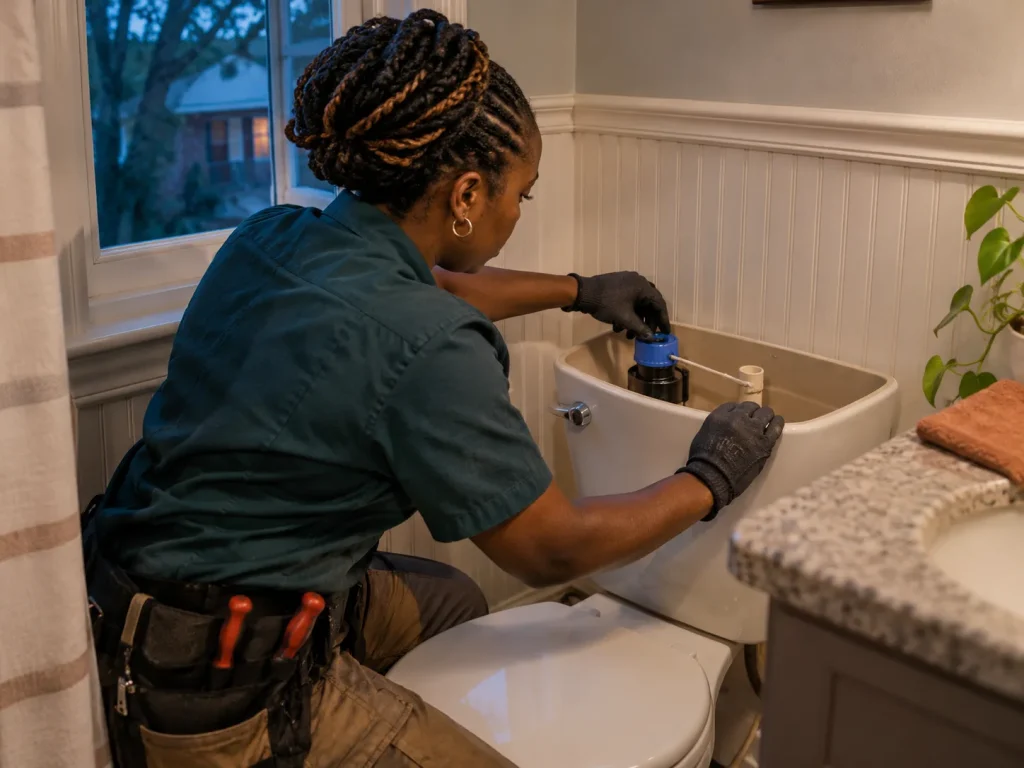
- Lift the tank lid and press the flapper (the rubber seal at the bottom of the tank) down to stop more water entering the bowl.
- Lift the float or float arm to stop the tank from refilling.
- Close the supply valve on the wall behind the toilet by turning it clockwise.
Is your toilet problem an emergency?
Use this chart once the water has stopped rising. It shows when to call and when it can wait.
- Call now
Water still rising after you close the valve
The valve may be stuck. Call now and keep towels down. - Call now
Water rises in a tub or shower when you flush
The main sewer line is blocked. Stop using water and call. - Same day
Plunging failed and it is your only toilet
Book a same-day visit. Do not keep flushing to test it. - Can wait
The toilet runs or refills on its own
Usually the flapper or fill valve. Book a regular visit.
Plunger or auger: what to try
| Tool | How to use it | Do not |
|---|---|---|
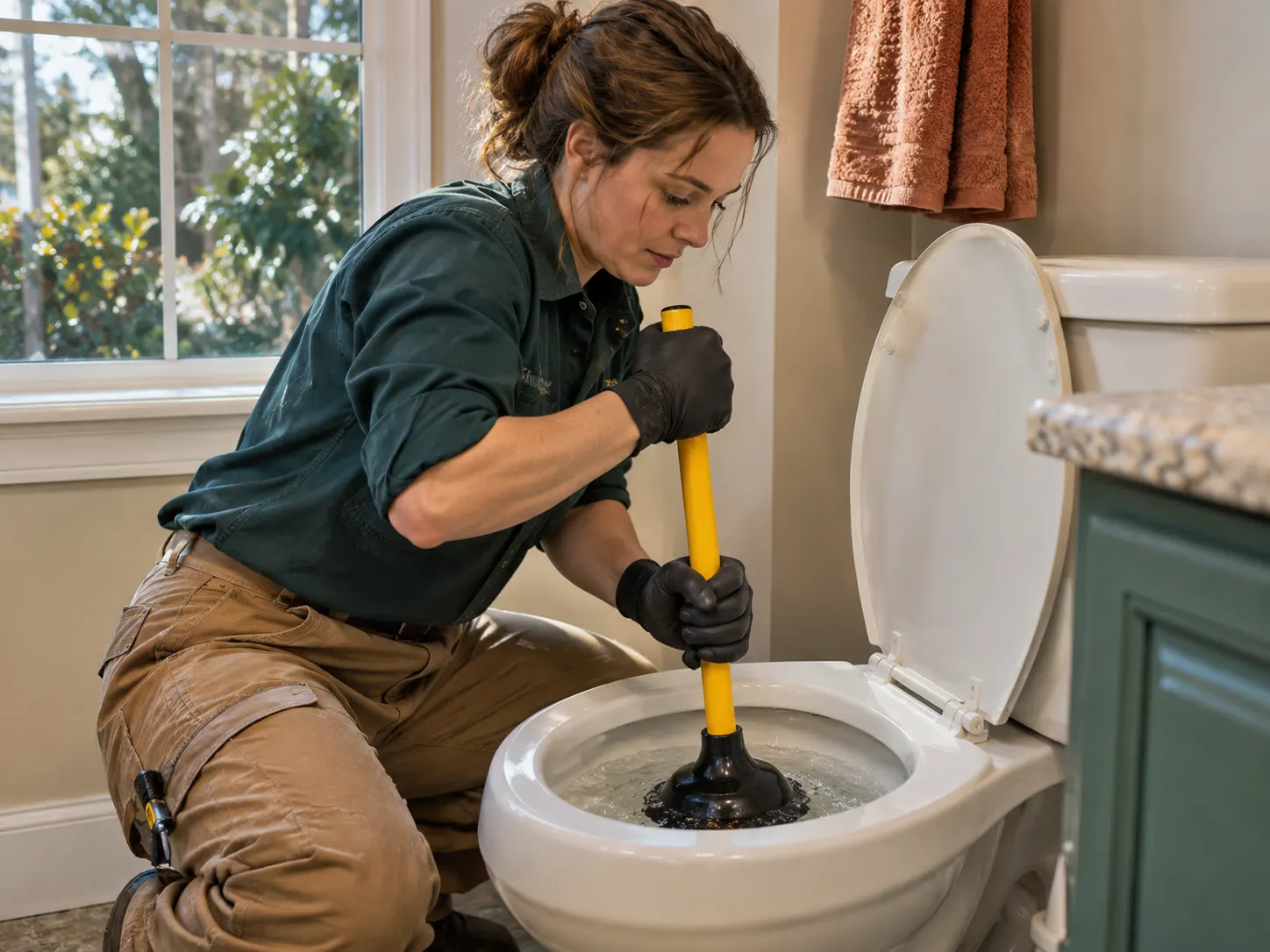
| Flange plunger (toilet plunger) | Seal it over the drain hole, push gently first, then pump firmly 10 to 15 times | Use a flat sink plunger; it cannot seal |
| Closet auger | Feed the cable into the bowl and crank to break up or pull the clog | Use a regular drain snake; it can scratch the bowl |
| Hot water and dish soap | Pour hot (not boiling) water and a squeeze of soap into the bowl, wait 15 minutes | Use boiling water; it can crack the porcelain |
Do not pour chemical drain cleaner into a toilet: it rarely clears a toilet clog and leaves caustic water for whoever plunges next.
Signs it is the sewer line, not the toilet
- Water rises in the tub or shower when you flush
- More than one toilet or drain is slow
- Gurgling from drains when the toilet is flushed
- Sewage smell near floor drains
If you see these, stop using water and see sewer backup repair.
Cleaning up toilet overflow safely
- Wear rubber gloves
- Soak up water with old towels and bag them, or wash them separately in hot water
- Clean the floor with soap and water, then a disinfectant
- Check the ceiling below if the bathroom is upstairs
- Dry the area fully with fans to prevent mold
Why toilets overflow
- A clog in the toilet trap, often from too much paper or something that should not be flushed
- A blocked main sewer line, which also shows up as water in a tub or shower
- A stuck fill valve that keeps filling the tank and spills into the overflow tube
- A blocked roof vent, which makes the toilet drain slowly and gurgle
- Tree roots in an older clay or cast iron sewer line
What not to flush
Most toilet clogs come from things that do not break down in water. Keep these out of the toilet:
- "Flushable" wipes, which do not break apart like toilet paper
- Paper towels, tissues and cotton swabs
- Feminine products and diapers
- Grease, food and cat litter
- Medicines; take them to a drug take-back site instead
How to keep it from happening again
Use less paper per flush on low-flow toilets, keep a flange plunger next to every toilet and replace a worn flapper or fill valve before it fails. If more than one toilet clogs in the same month, ask a plumber to check the main line with a camera. See sewer backup repair.
When to call a plumber
Call if plunging does not work, the toilet overflows again, something solid went down the toilet, or other drains are affected. See overflowing toilet repair in Augusta.