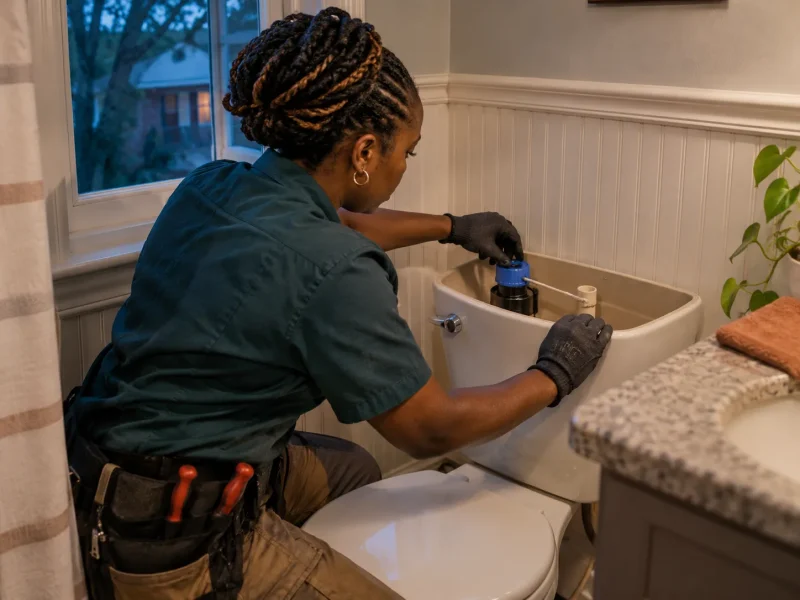
Quick answer: If a toilet keeps overflowing or will not flush, close the supply valve behind it and stop using it. If water also comes up in a tub or shower, the main sewer line is likely blocked. Call our 24/7 line to get a licensed plumber who clears the toilet or the line behind it.
Do this right now
- Close the supply valve on the wall behind the toilet (turn clockwise).
- Do not flush again until the bowl drains.
- If the tub or shower is filling too, stop using all water in the house.
How to stop the water in seconds and clean up safely: toilet overflowing: what to do first.
Overflowing toilet: call now or can it wait?
Most overflows can be stopped in seconds. What happens next decides how fast you need a plumber.
- Call now
The toilet keeps rising after you close the valve
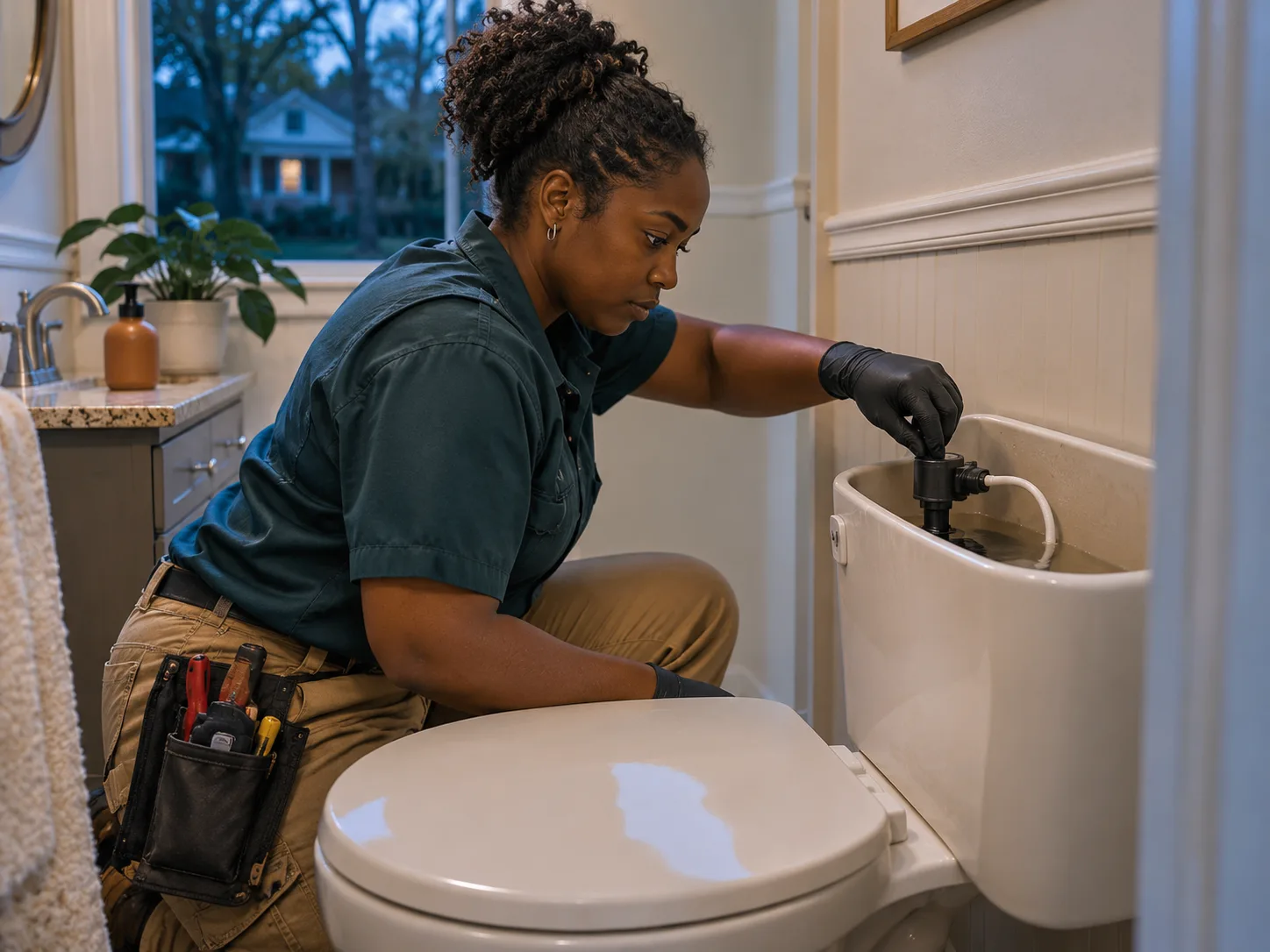
Push the flapper down, close the supply valve and call if the water still rises. - Call now
Sewage comes up in a tub or shower when you flush
That is the main sewer line, not the toilet. Stop using water and call now. - Same day
Your only toilet is clogged
Plunging did not work and you have no other toilet. Book a same-day visit. - Can wait
The toilet runs or refills on its own
It wastes water but will not flood. Close the supply valve and book a regular visit.
Clog in the toilet or the main sewer line?
| What you see | Likely problem |
|---|---|
| Only this toilet backs up; other drains work | Clog in the toilet or its drain |
| Flushing makes water rise in the tub or shower | Main sewer line blocked |
| Several toilets or drains are slow or gurgle | Main sewer line partly blocked |
| The bowl fills and keeps running into the overflow | Fill valve or flapper problem, not a clog |
If it points to the main line, see sewer backup repair.
Why does my toilet keep overflowing after plunging?
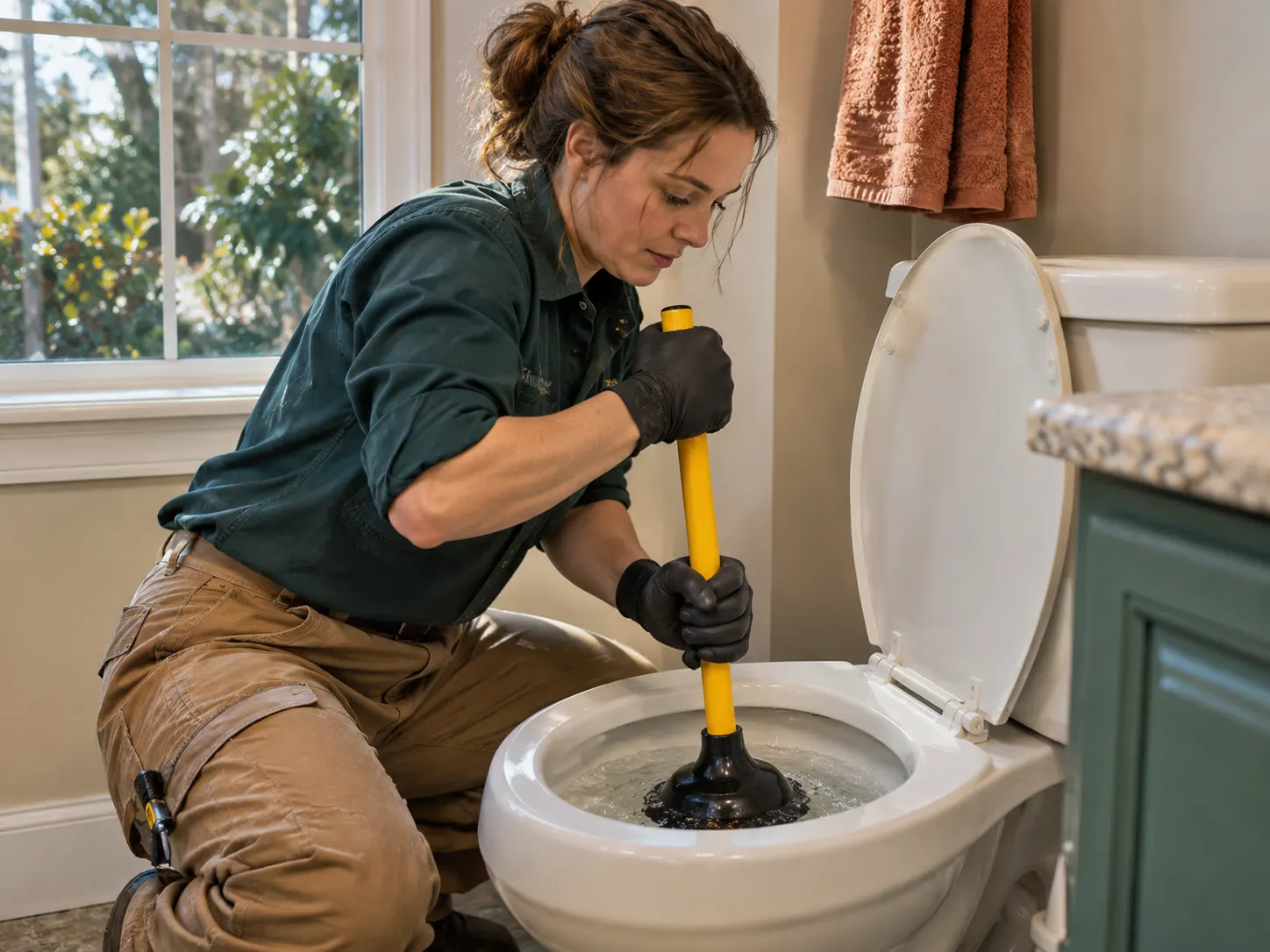
- Something solid is stuck in the trap, which a plunger cannot push through
- Wipes, paper towels or hygiene products are collecting in the drain line
- The main sewer line is partly blocked by roots or grease
- A blocked roof vent is stopping the toilet from draining with full force
A toilet that clogs every week usually has one of these causes. Clearing the cause, not just the clog, stops the repeat calls.
Is an overflowing toilet an emergency?
Yes, if the water will not stop rising, it is your only toilet, sewage is coming up in other drains, or water is reaching floors or the ceiling below. If you have a second toilet that works and the bowl has stopped rising, it can usually wait for a regular appointment.
What the plumber does
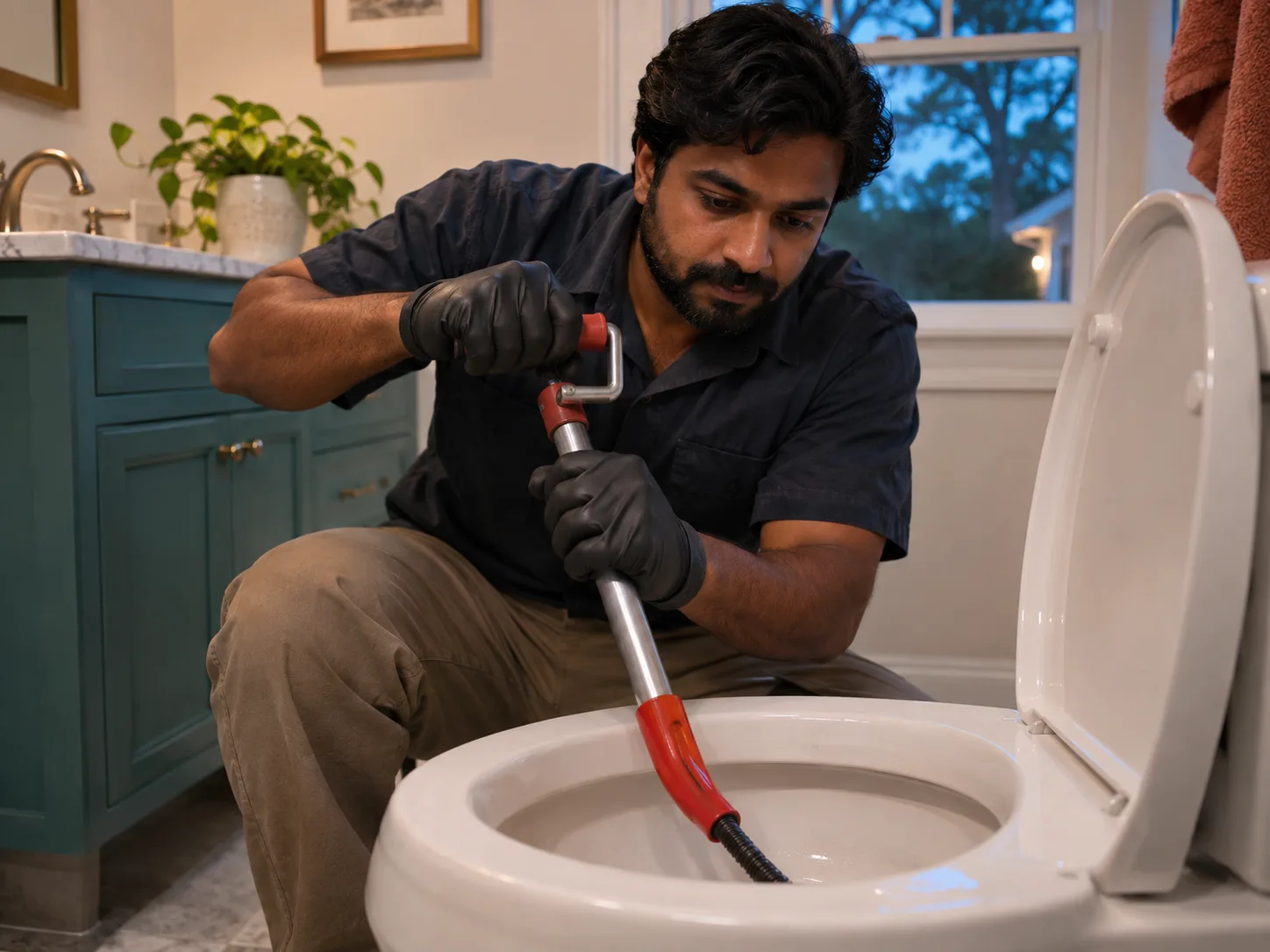
- Clears the toilet with a closet auger, a tool made for toilets that will not scratch the bowl.
- Removes the toilet if something solid is stuck, such as a toy or wipes, and resets it on a new wax seal.
- Clears the main line from a cleanout if the problem is past the toilet, and can run a camera to find the cause.
- Repairs the fill valve or flapper if the tank keeps running.
- Explains the cause and the price before any extra work.
What changes the cost?
- A simple clog, or a toilet that has to be removed
- Whether the problem is in the toilet or the main line
- Parts, such as a wax seal, fill valve or flapper
- The time of the call (see how after-hours pricing works)
You get the price before work starts.
Water on the floor: what about damage?
Toilet water that soaks under flooring or into a ceiling below can cause rot and mold if it stays wet. Dry it within a day or two, and ask about a water damage company if it reached a ceiling or subfloor. If the water came from the bowl after use, treat it as contaminated.
How to stop toilet clogs
- Flush only toilet paper; put wipes, paper towels and hygiene products in the trash
- Keep a plunger made for toilets (flange plunger) next to each toilet
- Fix a running toilet quickly; it can hide a slow drain problem
- If clogs keep coming back, ask for the drain line and vent to be checked